
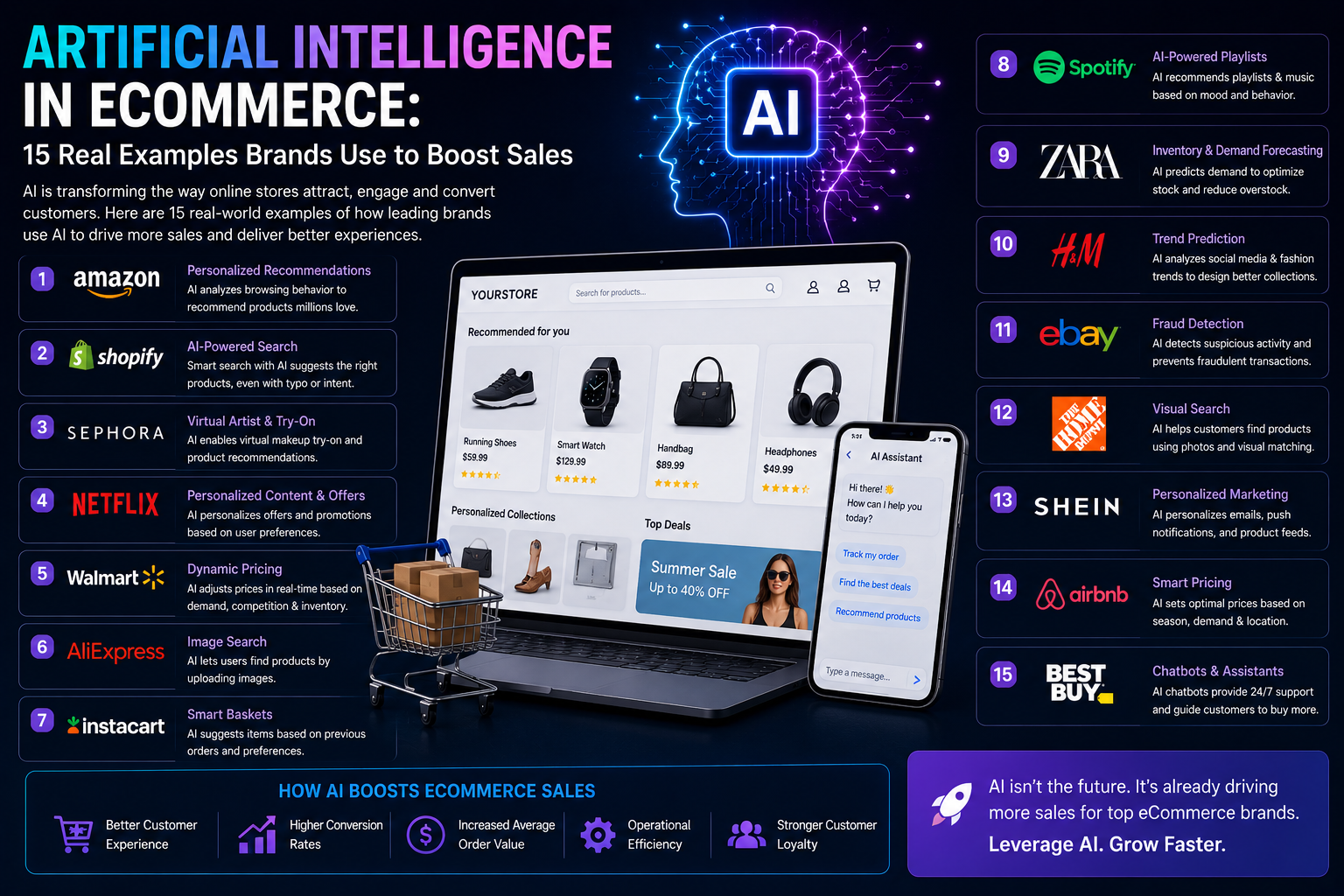
What Is Artificial Intelligence in Ecommerce?
Artificial Intelligence in Ecommerce refers to using AI technologies such as machine learning, predictive analytics, computer vision, and generative AI to automate business operations, personalize customer experiences, optimize pricing, improve inventory management, and increase online sales.
Why Artificial Intelligence Is Transforming Ecommerce
AI is reshaping ecommerce faster than ever. Online retailers now rely on intelligent systems that analyze customer behavior, automate repetitive tasks, and deliver highly personalized shopping experiences.
Instead of relying on manual decisions, businesses can predict demand, recommend products, answer customer questions instantly, and improve marketing performance through AI-powered automation.
- Personalized shopping experiences
- Higher conversion rates
- Better customer engagement
- Reduced operating costs
- Faster business growth
15 Real Examples of Artificial Intelligence in Ecommerce
1. Personalized Product Recommendations
AI studies browsing history, purchases, and customer preferences to recommend products shoppers are most likely to buy.
2. AI Chatbots
Virtual assistants answer customer questions 24/7, reducing support costs while improving customer satisfaction.
3. Smart Product Search
Natural language processing helps customers find products using conversational search instead of exact keywords.
4. Visual Search Technology
Customers upload images to instantly find similar products using computer vision.
5. Dynamic Pricing
AI automatically adjusts product prices based on demand, competitors, inventory levels, and customer behavior.
6. Inventory Forecasting
Machine learning predicts future demand, helping retailers avoid stock shortages and excess inventory.
7. Fraud Detection
AI identifies unusual purchasing patterns and blocks suspicious transactions before fraud occurs.
8. Email Marketing Automation
AI sends personalized email campaigns based on customer behavior and purchase history.
9. Customer Segmentation
AI groups shoppers into highly targeted audiences for more effective marketing campaigns.
10. AI Content Generation
Generative AI creates product descriptions, marketing copy, social media posts, and promotional content.
11. Predictive Analytics
Businesses forecast customer lifetime value, future purchases, and sales trends using predictive AI models.
12. Voice Commerce
Voice assistants allow shoppers to search and purchase products through natural conversations.
13. Review Analysis
AI analyzes thousands of customer reviews to identify product improvements and customer sentiment.
14. Automated Advertising
AI optimizes ad targeting, bidding strategies, and creative performance across digital marketing platforms.
15. Supply Chain Optimization
Artificial intelligence improves logistics, warehouse management, and shipping efficiency through predictive automation.
“Artificial Intelligence isn’t replacing ecommerce teams—it empowers them to make smarter decisions, automate workflows, and deliver exceptional customer experiences.”
Benefits for Ecommerce Brands
- Increase online sales
- Improve customer retention
- Reduce operational costs
- Automate repetitive workflows
- Boost marketing ROI
- Deliver personalized shopping journeys
- Improve inventory accuracy
- Scale business operations faster
The Future of AI in Ecommerce
Generative AI, predictive analytics, autonomous customer service, and intelligent automation will continue transforming ecommerce over the next decade. Brands adopting AI today will gain a significant competitive advantage through smarter operations and superior customer experiences.
Conclusion
Artificial Intelligence in Ecommerce is no longer a future trend—it’s a competitive necessity. From personalized recommendations and automated marketing to predictive inventory management and AI-powered customer support, businesses of every size can leverage AI to improve efficiency, drive revenue, and create better shopping experiences.


