
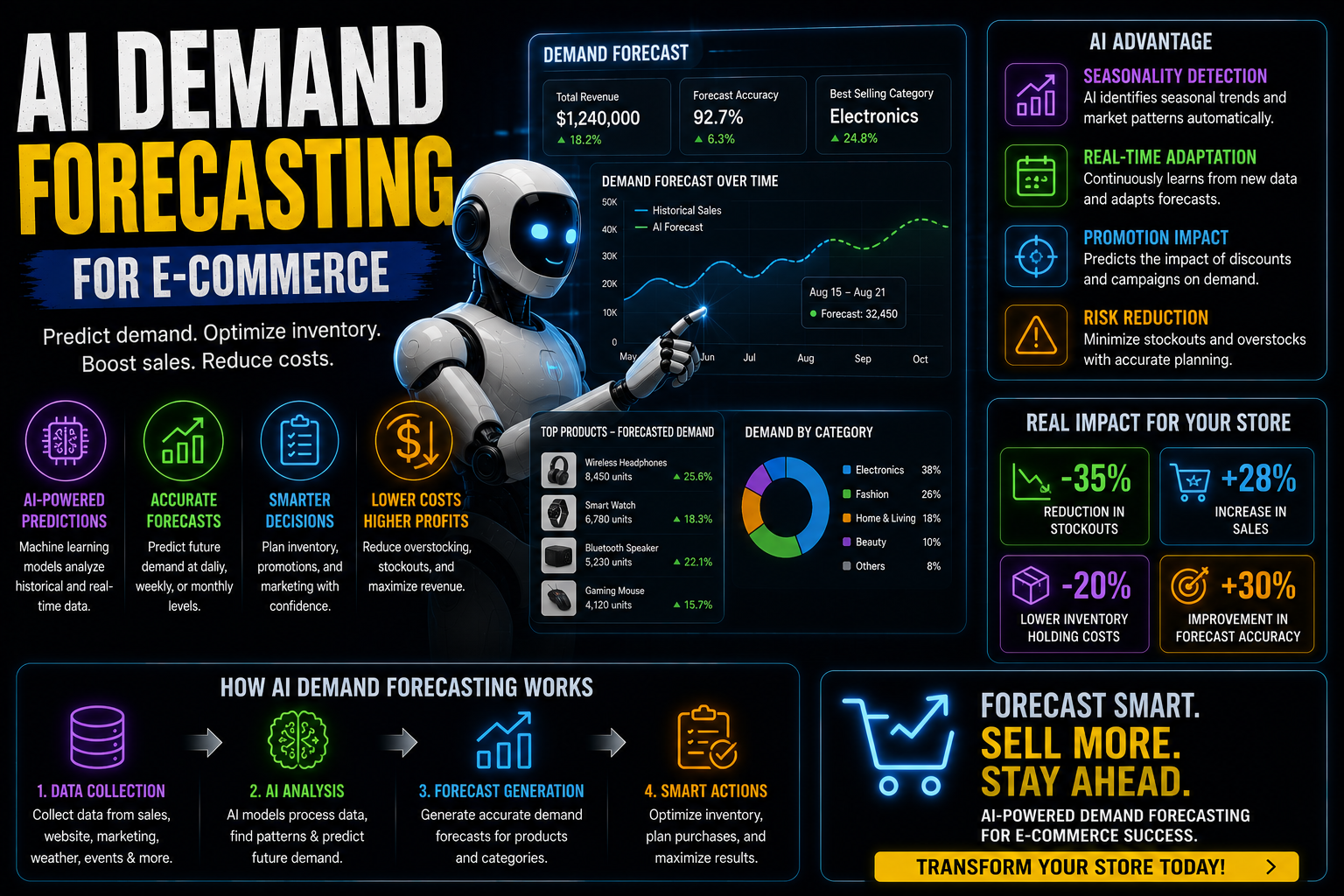
What is AI Demand Forecasting Ecommerce?
AI demand forecasting ecommerce uses artificial intelligence, machine learning, and predictive analytics to forecast future product demand. By analyzing customer behavior, sales history, seasonality, and market trends, businesses can make smarter inventory and purchasing decisions.
Why AI Demand Forecasting Is Transforming Ecommerce
The ecommerce industry moves faster than ever. Consumer preferences shift rapidly, viral trends can create unexpected demand spikes, and supply chain disruptions can affect profitability overnight.
Traditional forecasting methods often struggle to keep up. AI-driven forecasting solves this challenge by analyzing massive datasets and continuously updating predictions in real time.
- More accurate inventory planning
- Reduced stockouts
- Lower inventory carrying costs
- Improved customer satisfaction
- Higher profit margins
How AI Demand Forecasting Ecommerce Works
Modern AI forecasting platforms combine machine learning algorithms with predictive analytics to uncover patterns hidden within ecommerce data.
Historical Sales Analysis
AI evaluates previous sales performance to identify recurring trends and future demand opportunities.
- Seasonal buying patterns
- Product lifecycle trends
- Peak sales periods
- Repeat customer behavior
Customer Behavior Intelligence
AI systems monitor customer actions across online stores.
- Product views
- Search activity
- Add-to-cart behavior
- Wishlist interactions
- Purchase frequency
This data helps predict buying intent before purchases occur.
Marketing Performance Signals
AI forecasting models also consider external demand drivers.
- Email campaigns
- Social media engagement
- Paid advertising performance
- Influencer promotions
- Product launches
Benefits of AI Demand Forecasting Ecommerce
Reduce Stockouts
Inventory shortages result in lost sales and frustrated customers. AI helps businesses maintain optimal inventory levels by predicting future demand spikes.
Lower Inventory Costs
Overstocking ties up valuable capital. AI forecasting improves purchasing decisions and minimizes excess inventory.
Improve Cash Flow
Businesses gain better visibility into future inventory requirements, helping allocate resources more efficiently.
Enhance Customer Experience
Accurate forecasting ensures products remain available when customers need them.
- Better product availability
- Faster fulfillment
- Higher satisfaction rates
- Stronger customer loyalty
AI Forecasting and Ecommerce Automation
One of the biggest advantages of AI demand forecasting ecommerce is its integration with broader automation systems.
Modern ecommerce businesses connect forecasting tools with:
- Inventory management software
- Supply chain platforms
- Marketing automation systems
- CRM solutions
- Business intelligence dashboards
This creates a fully connected ecommerce ecosystem powered by predictive intelligence.
The Future of Predictive Ecommerce
AI forecasting technology continues evolving rapidly.
Emerging innovations include:
- Real-time demand forecasting
- Generative AI analytics
- Predictive customer modeling
- Automated inventory purchasing
- AI-powered supply chain optimization
- Cross-channel sales forecasting
Businesses that adopt these capabilities early can gain a significant competitive advantage in increasingly crowded online markets.
Conclusion
AI demand forecasting ecommerce is becoming an essential technology for modern online retailers. By leveraging machine learning, predictive analytics, and automation, businesses can optimize inventory, improve customer experiences, and maximize profitability.
As ecommerce competition intensifies, predictive intelligence will play a critical role in helping brands stay ahead of market changes and consumer demand trends.


