
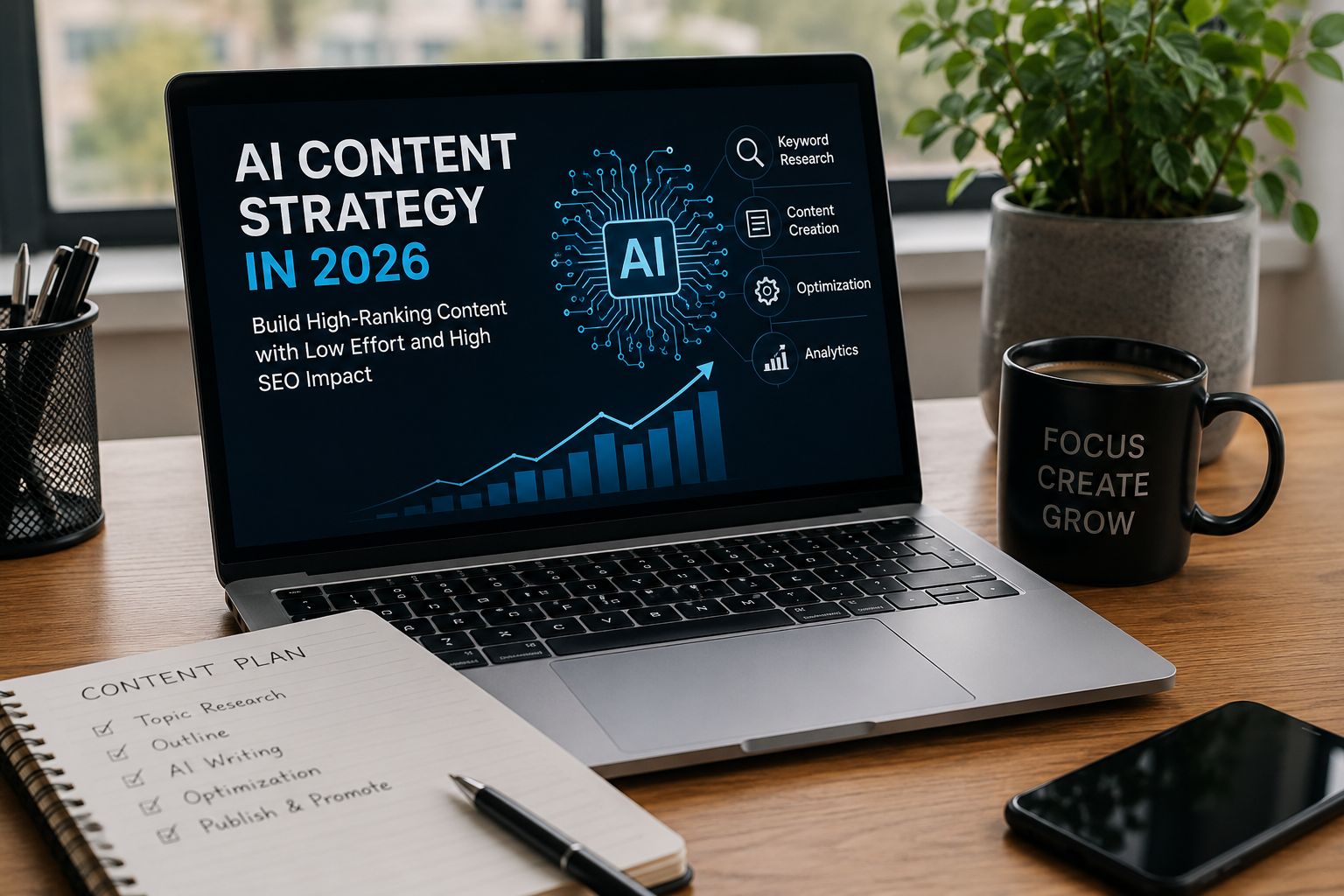
What Is AI Content Strategy in 2026?
AI Content Strategy in 2026 focuses on combining automation, semantic SEO, search intent analysis, and AI-assisted workflows to create scalable content ecosystems that rank faster while requiring less manual production effort.
The End of Volume-Based SEO
For years, digital publishers believed more content automatically meant more traffic. That strategy is collapsing fast.
Search engines are becoming significantly better at identifying expertise, semantic depth, and topical relevance. Instead of rewarding mass-produced low-value articles, modern algorithms prioritize brands that demonstrate authority across interconnected topics.
This shift is why AI Content Strategy in 2026 has become one of the most important competitive advantages in digital marketing.
Why AI-Powered Content Systems Are Dominating Search
AI is no longer just a writing assistant. It now operates as a full-scale strategic workflow engine.
Modern AI workflows now help brands:
- Identify high-opportunity keyword clusters
- Analyze user intent patterns
- Build semantic content relationships
- Optimize internal linking structures
- Generate scalable editorial calendars
- Improve CTR through headline testing
- Repurpose content across multiple platforms
The biggest shift is efficiency. Teams that once needed dozens of writers can now produce stronger topical authority with leaner operations and better strategic focus.
Topical Authority Is the New SEO Currency
Search engines increasingly evaluate how deeply a brand understands a subject area.
That means isolated blog posts are far less effective than connected topic ecosystems.
High-performing AI content ecosystems include:
- Pillar content hubs
- Semantic keyword clusters
- AI-assisted research pipelines
- Cross-platform media distribution
- Video and visual SEO integration
- Automated optimization systems
Brands investing in topical authority are seeing stronger long-term rankings because their content appears more trustworthy and comprehensive to search engines.
Google Discover Is Reshaping Content Strategy
Google Discover traffic continues influencing editorial strategies across media, creator, and ecommerce industries.
Unlike traditional SEO, Discover rewards engagement signals, emotional curiosity, mobile readability, and visual storytelling.
Successful Discover-focused AI content strategies prioritize:
- Emotion-driven headlines
- High-quality visuals
- Fast-loading mobile experiences
- Short readable paragraphs
- Trend-aware storytelling
- Audience retention optimization
This is why AI-assisted content systems now combine SEO, UX design, analytics, and behavioral optimization into a unified publishing workflow.
Why Human Strategy Still Matters
Despite rapid automation growth, purely automated content rarely becomes category-leading content.
The highest-performing publishers combine AI efficiency with human editorial judgment, branding insight, and audience psychology.
AI can accelerate production, but humans still guide:
- Brand positioning
- Narrative framing
- Audience trust
- Emotional engagement
- Commercial intent alignment
- Strategic storytelling
The Rise of AI-Enhanced Creator Economies
Creators are no longer competing solely on creativity. They are competing on workflow efficiency and distribution systems.
AI-powered creators can now:
- Publish faster
- Scale across platforms
- Automate social promotion
- Generate branded visuals instantly
- Repurpose long-form content into short-form media
- Build audience ecosystems more efficiently
This transformation is reshaping the economics of digital publishing, media startups, and personal branding.
How Brands Can Build a Winning AI Content Strategy in 2026
1. Focus on Topic Ecosystems
Build interconnected clusters instead of random isolated articles.
2. Prioritize Search Intent
Understand why users search, not just what they search.
3. Combine AI With Editorial Oversight
Human refinement dramatically improves trust, readability, and brand consistency.
4. Optimize for Engagement Signals
CTR, dwell time, and retention increasingly influence long-term visibility.
5. Invest in Multi-Format Content
Modern SEO now includes video, AI-generated visuals, social content, and interactive experiences.
The Future of AI Content Strategy
The next phase of digital marketing will revolve around intelligent publishing systems instead of isolated content production.
Brands that combine AI automation, semantic authority, creator-focused storytelling, and behavioral optimization will dominate search visibility over the next decade.
Meanwhile, outdated volume-based blogging strategies will continue losing effectiveness as search algorithms evolve toward quality and expertise signals.
Conclusion
AI Content Strategy in 2026 is fundamentally changing how businesses approach SEO, branding, and digital publishing.
The future belongs to organizations that build scalable content ecosystems powered by automation, strategic storytelling, and topical authority.
As AI workflows continue evolving, the brands that adapt early will gain a significant competitive advantage in search, media visibility, and creator-driven digital markets.


