
Quick Answer
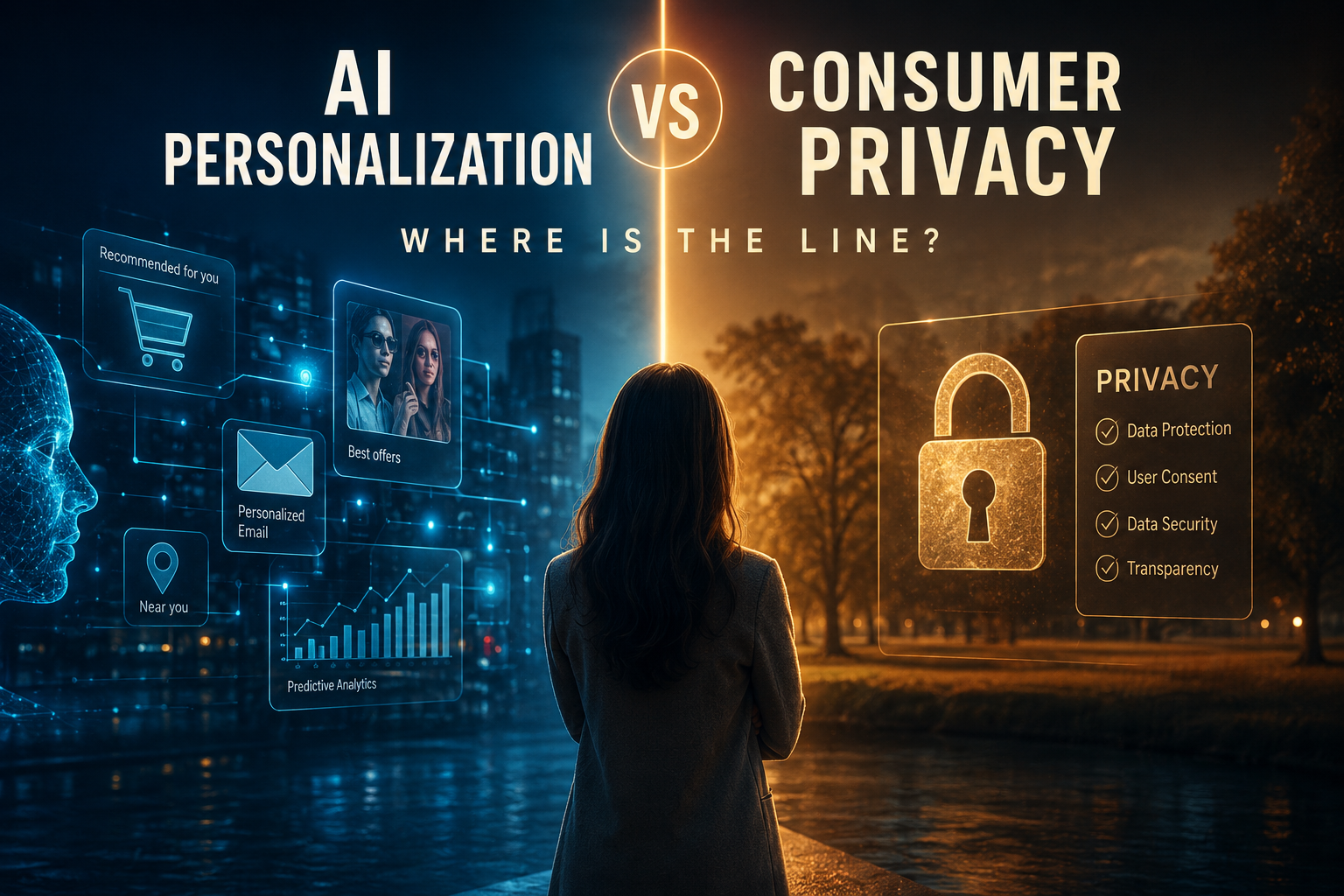
AI personalization enhances customer experiences through data-driven recommendations and targeted content. However, the line is crossed when businesses collect, analyze, or share more personal data than consumers knowingly consent to provide.
The Rise of AI-Powered Personalization
Artificial intelligence is transforming modern marketing by helping brands deliver highly personalized experiences. AI systems can analyze customer behavior, preferences, browsing patterns, and purchase history to create tailored recommendations and marketing campaigns.
From product suggestions to personalized emails, AI allows businesses to engage customers with greater relevance than ever before.
- Personalized product recommendations
- AI-generated email campaigns
- Dynamic website experiences
- Predictive customer analytics
- Targeted advertising
Why Consumer Privacy Matters
As personalization becomes more advanced, privacy concerns continue to grow. Consumers are increasingly aware that their online activities generate valuable data that companies use for marketing purposes.
Many users are asking important questions about transparency, data ownership, and digital rights.
- Excessive data collection
- Limited transparency
- Cybersecurity risks
- Behavioral tracking concerns
- Third-party data sharing
The Benefits of AI Personalization
When implemented responsibly, AI personalization creates significant value for both businesses and consumers.
Improved Customer Experience
Customers receive more relevant content, recommendations, and offers based on their interests and needs.
Higher Marketing Efficiency
AI enables marketers to target audiences more effectively, improving campaign performance and reducing wasted advertising spend.
Stronger Customer Relationships
Personalized experiences can increase satisfaction, loyalty, and long-term engagement when consumers feel understood rather than monitored.
Where the Ethical Line Begins
The debate surrounding AI Personalization vs Consumer Privacy often centers on consent and transparency.
The ethical boundary is crossed when organizations prioritize data collection over consumer trust.
- Users do not understand how their data is used
- Data collection exceeds customer expectations
- Personalization feels intrusive
- Information is shared without clear consent
Privacy-First AI Marketing Strategies
Leading organizations are adopting privacy-focused approaches that balance personalization and consumer protection.
Use First-Party Data
Collect information directly from customers through subscriptions, purchases, surveys, and account registrations.
Improve Transparency
Clearly explain what information is collected, why it is collected, and how it will be used.
Minimize Data Collection
Gather only the data necessary to provide value and improve customer experiences.
Give Consumers Control
Allow users to manage preferences, adjust privacy settings, and opt out when desired.
The Future of AI Personalization
The future of digital marketing will likely focus on balancing personalization and privacy rather than choosing one over the other.
Emerging technologies such as privacy-preserving AI, anonymous analytics, and consent-driven personalization are helping organizations create more ethical marketing ecosystems.
- Privacy-preserving AI
- Federated learning
- Consent-based targeting
- Secure customer data platforms
- Ethical AI governance
Conclusion
AI Personalization vs Consumer Privacy: Where Is the Line? is one of the defining questions of the modern digital economy.
Consumers increasingly expect personalized experiences while demanding greater transparency and control over their personal information. Businesses that successfully balance both priorities will be better positioned to build trust, strengthen customer relationships, and thrive in the future of AI-powered marketing.


