
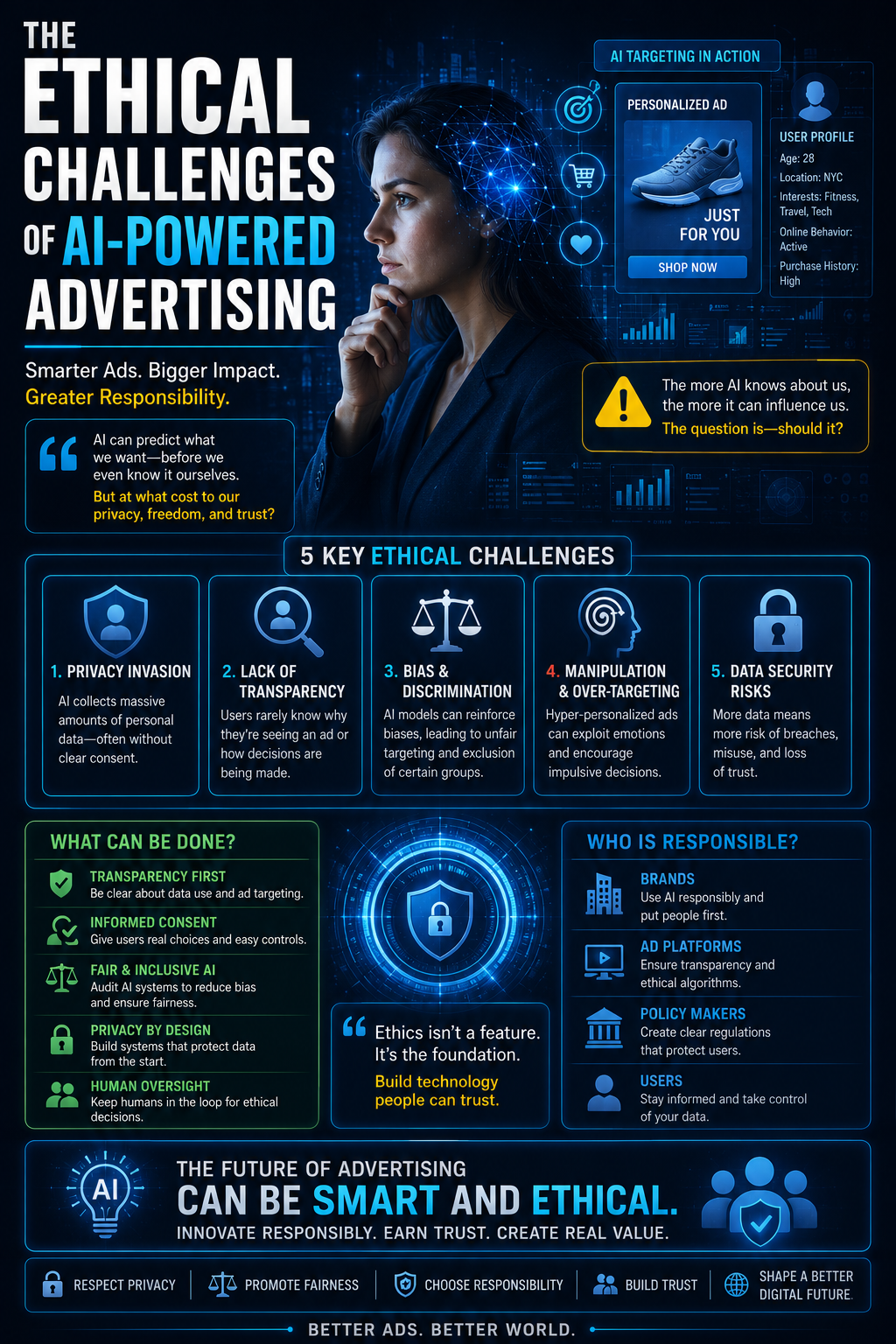
What Are The Ethical Challenges of AI-Powered Advertising?
The Ethical Challenges of AI-Powered Advertising involve concerns about consumer privacy, data collection, algorithmic bias, transparency, manipulation, and accountability. As AI becomes more integrated into marketing systems, businesses must balance personalization and automation with ethical responsibility, regulatory compliance, and consumer trust.
Why AI-Powered Advertising Is Growing So Rapidly
Artificial intelligence is transforming advertising faster than many marketers predicted. From personalized product recommendations to automated campaign optimization, AI is helping brands reach audiences with unprecedented precision.
Yet alongside these advantages comes a growing debate about The Ethical Challenges of AI-Powered Advertising.
As AI systems gain access to more consumer data and become increasingly capable of predicting behavior, businesses face important questions:
- How much personalization is too much?
- Where should privacy boundaries be drawn?
- Can algorithms truly be fair?
- Who is accountable when AI makes harmful decisions?
For brands, creators, and digital marketers, these questions are becoming central to the future of advertising.
Consumer Privacy Remains the Biggest Concern
The Data Collection Dilemma
One of the most significant aspects of The Ethical Challenges of AI-Powered Advertising is consumer privacy.
AI advertising systems often rely on:
- Browsing history
- Purchase behavior
- Social media activity
- Location data
- Device information
- Engagement patterns
While this information helps improve personalization, many consumers remain unaware of how extensively their digital behavior is tracked.
The Growing Demand for Transparency
Consumers increasingly expect companies to explain:
- What data is collected
- Why it is collected
- How it is used
- Who has access to it
Transparent communication is quickly becoming a competitive advantage.
Algorithmic Bias and Fairness Issues
AI Learns From Historical Data
AI models are only as fair as the data used to train them.
When historical datasets contain bias, advertising algorithms may unintentionally:
- Exclude specific demographics
- Reinforce stereotypes
- Limit opportunities for certain groups
- Create discriminatory targeting outcomes
Even without malicious intent, biased algorithms can generate unfair advertising experiences.
Why Bias Matters in Digital Advertising
Advertising influences:
- Consumer awareness
- Product discovery
- Employment opportunities
- Financial services marketing
- Educational outreach
Responsible AI governance is becoming a critical component of modern marketing operations.
The Risk of Manipulative Personalization
When Personalization Becomes Persuasion
AI excels at understanding human behavior.
This capability allows brands to create highly relevant advertisements, but it also introduces ethical concerns regarding manipulation.
Advanced AI systems can predict:
- Emotional responses
- Purchasing tendencies
- Consumer vulnerabilities
- Behavioral triggers
The line between helpful personalization and psychological manipulation can become blurred.
The Future of Consumer Autonomy
Businesses must consider whether AI advertising enhances consumer choice or subtly influences decision-making in ways users may not fully understand.
Transparency and Explainability in AI Marketing
The Black Box Problem
Many AI systems operate through complex machine learning processes that even developers struggle to fully explain.
This creates challenges when marketers need to answer:
- Why was a user targeted?
- Why was a specific ad shown?
- Why did the algorithm prioritize one audience over another?
Without explainability, accountability becomes difficult.
Building Trust Through Transparency
Leading organizations are increasingly investing in:
- Explainable AI frameworks
- Ethical review processes
- Transparency reports
- AI governance policies
These practices help strengthen consumer confidence while reducing reputational risks.
AI Advertising and the Creator Economy
New Opportunities for Digital Creators
AI-powered advertising is reshaping the creator economy.
Creators now use AI tools for:
- Content optimization
- Audience analysis
- Campaign automation
- Brand collaborations
- Media production workflows
These innovations improve efficiency and scalability.
Emerging Ethical Questions
Creator-focused AI advertising also introduces concerns such as:
- Synthetic influencers
- AI-generated endorsements
- Disclosure requirements
- Authenticity challenges
- Audience trust issues
Regulatory Pressure Is Increasing Worldwide
Governments and regulatory bodies are paying closer attention to AI advertising practices.
- Data privacy protections
- Consumer consent
- Automated decision-making
- Algorithmic accountability
- Advertising transparency
Future regulations may require companies to provide clearer disclosures whenever AI systems influence marketing decisions.
Best Practices for Responsible AI Advertising
Prioritize Consumer Consent
Ensure users understand how their data is collected and used.
Conduct Bias Audits
Regularly review AI models for unfair outcomes and discriminatory patterns.
Improve Transparency
Clearly disclose AI-driven advertising practices whenever appropriate.
Establish Human Oversight
AI should assist decision-making, not replace human accountability.
Build Ethical Governance Systems
Create policies that guide responsible AI deployment across marketing operations.
The Future of Ethical AI Advertising
The future of advertising will likely be shaped by two competing forces:
- Increasing automation
- Increasing demand for accountability
Consumers want personalized experiences, but they also want privacy, fairness, and transparency.
The organizations that succeed will not simply have the most powerful algorithms. They will be the businesses that combine innovation with ethical responsibility.
Conclusion
The Ethical Challenges of AI-Powered Advertising are becoming one of the defining issues in modern marketing.
While AI offers remarkable opportunities for personalization, automation, and campaign optimization, it also raises critical concerns about privacy, bias, transparency, and consumer trust.
Organizations that embrace responsible AI practices today will be better positioned to build stronger customer relationships, protect brand reputation, and thrive in the evolving digital economy.


