
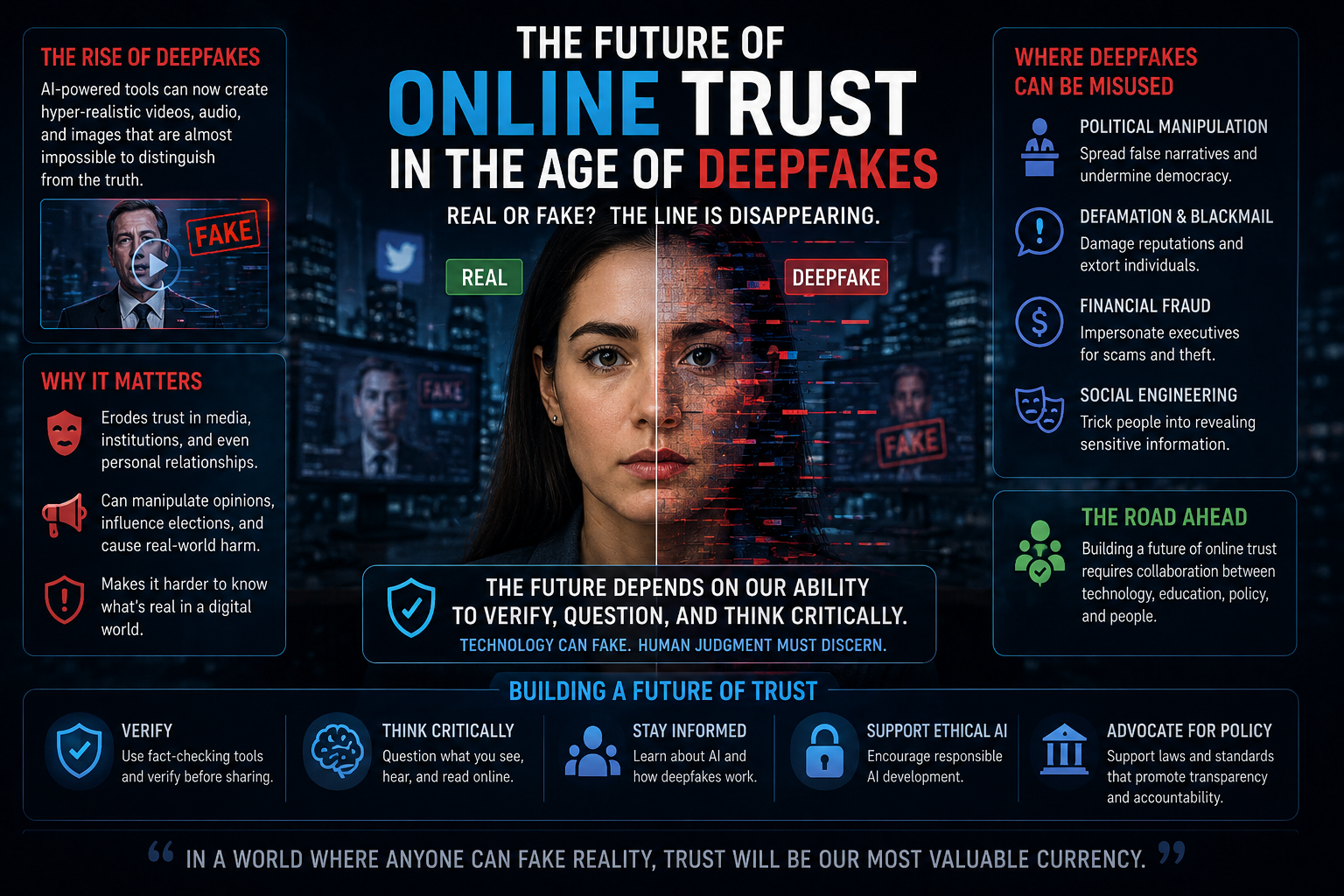
Featured Snippet Answer
The Future of Online Trust in the Age of Deepfakes depends on advances in AI detection, digital verification systems, content authentication standards, and public media literacy. As synthetic media becomes more convincing, organizations must adopt new trust frameworks that verify authenticity while maintaining transparency across digital platforms.
Why Online Trust Is Facing Its Biggest Challenge Yet
The Future of Online Trust in the Age of Deepfakes has become one of the most important discussions in technology, media, and digital marketing.
AI-powered tools can now generate highly realistic videos, images, voice recordings, and even live digital avatars. While these innovations unlock new creative opportunities, they also create serious concerns about misinformation, manipulation, fraud, and reputation damage.
For businesses, content creators, marketers, and consumers, the question is no longer whether deepfakes will impact trust—it is how society will adapt.
How Deepfakes Are Changing Digital Reality
Modern generative AI models can create synthetic media that is increasingly difficult to distinguish from authentic content.
This transformation affects multiple industries:
- Social media platforms
- Digital marketing campaigns
- Political communication
- News publishing
- Influencer marketing
- Corporate branding
- Video production workflows
As content creation becomes more automated, traditional trust signals become less reliable.
The Rise of AI Verification Systems
One major response to deepfake growth is the development of AI-powered verification systems.
Content Authentication Technologies
Emerging verification frameworks aim to prove where content originated and whether it has been altered.
- Digital watermarking
- Content credentials
- Blockchain-based verification
- Metadata authentication
- Cryptographic signatures
These technologies may become essential components of future content ecosystems.
AI Detecting AI
Organizations are increasingly deploying machine learning systems designed to identify synthetic media.
Detection tools analyze:
- Facial inconsistencies
- Audio irregularities
- Compression artifacts
- Synthetic movement patterns
- Manipulated metadata
Although detection remains an ongoing challenge, AI-driven verification continues improving.
What This Means for Brands and Marketers
Trust has always been a valuable business asset. In the AI era, it may become the most important competitive advantage.
Brands that prioritize transparency and authenticity will likely earn stronger audience loyalty.
New Trust Strategies for Digital Brands
- Verified content publishing
- Transparent AI disclosure policies
- Authentic creator partnerships
- Content provenance tracking
- Regular trust audits
Marketing teams must now think beyond engagement metrics and focus on credibility signals.
The Creator Economy and Trust Challenges
The creator economy is rapidly adopting AI tools for content production.
Creators use AI for:
- Video editing
- Voice generation
- Thumbnail creation
- Content repurposing
- Virtual influencer development
While these tools increase efficiency, audiences increasingly want transparency about what is AI-generated and what is authentic.
The creators who communicate openly about AI usage may build stronger long-term trust with their communities.
Future Trust Signals May Look Very Different
Traditional indicators such as photos, videos, and audio recordings are no longer guaranteed proof of authenticity.
Future trust systems may rely on:
- Verified identity credentials
- Platform authentication layers
- AI-generated content labels
- Digital provenance certificates
- Cross-platform verification networks
The internet is moving toward a model where verification becomes embedded into content itself.
How Businesses Can Prepare Today
Organizations that prepare early for the trust challenges created by deepfakes will be better positioned to protect their reputation.
Practical Steps
- Develop AI content governance policies
- Implement media verification workflows
- Educate employees about deepfake risks
- Monitor brand impersonation threats
- Invest in content authentication technology
These actions help strengthen resilience against future misinformation campaigns and synthetic media attacks.
People Also Ask
Will deepfakes destroy online trust?
Deepfakes create challenges, but new verification technologies and digital authentication systems are emerging to strengthen trust online.
How can AI help verify content authenticity?
AI can analyze videos, images, and audio for manipulation indicators while supporting automated content verification workflows.
Why is content authentication becoming important?
As synthetic media becomes more common, authentication helps users identify genuine content and reduce misinformation risks.
How will brands maintain trust in the AI era?
Brands can maintain trust through transparency, verified publishing systems, responsible AI use, and clear communication with audiences.
What role will creators play in future trust systems?
Creators who disclose AI usage and prioritize authenticity will likely build stronger audience relationships and long-term credibility.
Conclusion
The Future of Online Trust in the Age of Deepfakes will be shaped by a combination of technology, transparency, regulation, and public awareness.
As AI-generated media becomes more sophisticated, trust will increasingly depend on verification systems rather than visual evidence alone.
For businesses, creators, and marketers, the opportunity lies in embracing responsible AI workflows while building authentic relationships with audiences. Those who invest in credibility today may become the most trusted voices in tomorrow’s digital ecosystem.


