
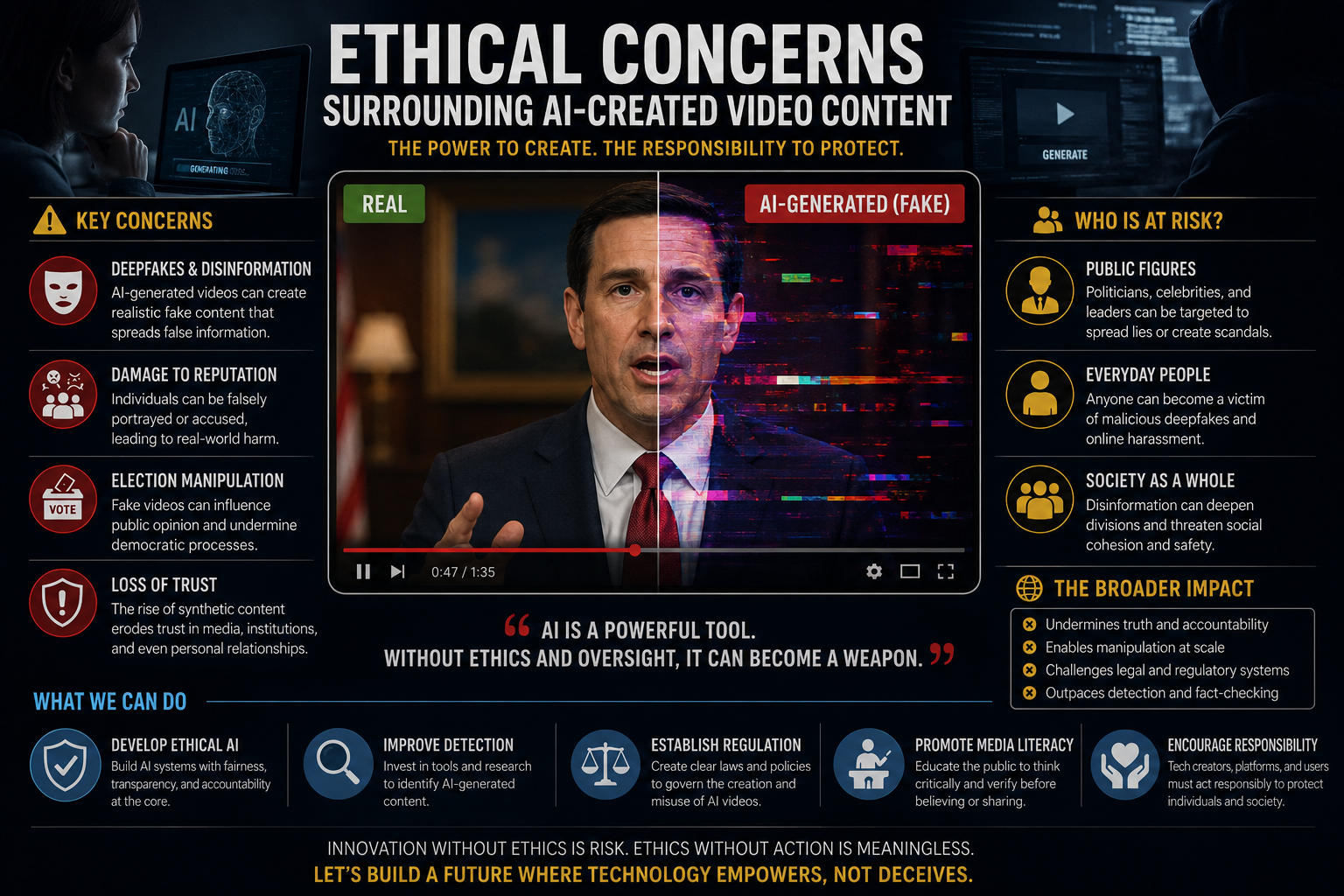
Featured Snippet
Ethical Concerns Surrounding AI-Created Video Content include misinformation,
deepfakes, privacy violations, copyright disputes, identity misuse, and declining trust in
digital media. As AI-generated videos become increasingly realistic, creators and businesses
must balance innovation with transparency and responsible content practices.
The Rapid Rise of AI Video Generation
Artificial intelligence is transforming video production faster than ever before.
Businesses, marketers, and creators can now generate realistic videos, digital avatars,
AI voiceovers, and automated edits in minutes rather than days.
These innovations are reshaping content workflows across advertising, social media,
education, and entertainment. However, they also introduce significant ethical challenges
that cannot be ignored.
Why Ethical Concerns Surrounding AI-Created Video Content Matter
The widespread adoption of AI video tools means millions of people encounter synthetic
media every day. While these technologies create exciting opportunities, they also raise
important questions about authenticity, accountability, and public trust.
- Accuracy of information
- Transparency in content creation
- User privacy protection
- Copyright ownership
- Manipulation risks
- Digital trust
Deepfakes and Digital Deception
One of the most visible ethical concerns is the rise of deepfake technology.
AI systems can create realistic videos showing individuals saying or doing things
that never actually happened.
Potential consequences include:
- Political misinformation
- Corporate sabotage
- Celebrity impersonation
- Financial fraud
- Reputation damage
The Erosion of Public Trust
Video has traditionally been considered strong evidence of real events.
As AI-generated content becomes more convincing, audiences may begin questioning
the authenticity of all digital media.
This creates a growing challenge for:
- Journalists
- Content creators
- Brands
- Governments
- Social media platforms
Privacy and Consent Issues
AI tools can replicate voices, faces, and personal characteristics using publicly
available content. Without proper consent, these capabilities can lead to serious
privacy violations.
Examples include:
- Unauthorized voice cloning
- Digital identity theft
- Non-consensual video creation
- Impersonation scams
Copyright and Intellectual Property Challenges
AI-generated videos often rely on massive datasets containing existing content.
This raises questions about ownership and fair use.
- Who owns AI-generated videos?
- Should creators be compensated for training data?
- How should derivative works be regulated?
- What legal protections are required?
These issues continue to shape global discussions around AI regulation and content rights.
Ethical Risks in AI-Powered Marketing
Brands increasingly use AI-generated videos to create personalized campaigns,
social media advertisements, and promotional content.
Ethical concerns arise when consumers are unaware that content has been generated
or significantly modified by artificial intelligence.
Transparency helps prevent:
- Consumer deception
- Misleading endorsements
- False testimonials
- Manipulative advertising
The Creator Economy and Authenticity
AI influencers and virtual personalities are becoming increasingly popular.
While they offer new monetization opportunities, they also challenge traditional
ideas of authenticity and audience trust.
Important questions include:
- Should AI influencers be clearly labeled?
- Can audiences distinguish virtual creators from real people?
- How much automation is too much?
Building Responsible AI Video Workflows
Organizations can reduce ethical risks by adopting responsible AI policies and
maintaining strong oversight.
Best Practices
- Disclose AI-generated content
- Obtain proper consent
- Implement review processes
- Label synthetic media
- Maintain human oversight
- Verify information before publishing
The Future of Ethical AI Video Creation
The future of AI-generated media will likely include stronger regulations,
verification technologies, and transparency standards.
Emerging solutions include:
- Digital watermarking
- AI content detection tools
- Authenticity verification systems
- Industry disclosure standards
- Enhanced privacy protections
Conclusion
Ethical Concerns Surrounding AI-Created Video Content are becoming
one of the most important discussions in the digital media industry. While AI offers
remarkable opportunities for innovation, creators and businesses must prioritize
transparency, accountability, and trust.
Organizations that embrace responsible AI practices today will be better positioned
to succeed as synthetic media becomes an increasingly important part of the creator
economy and digital marketing landscape.


