
Featured Snippet
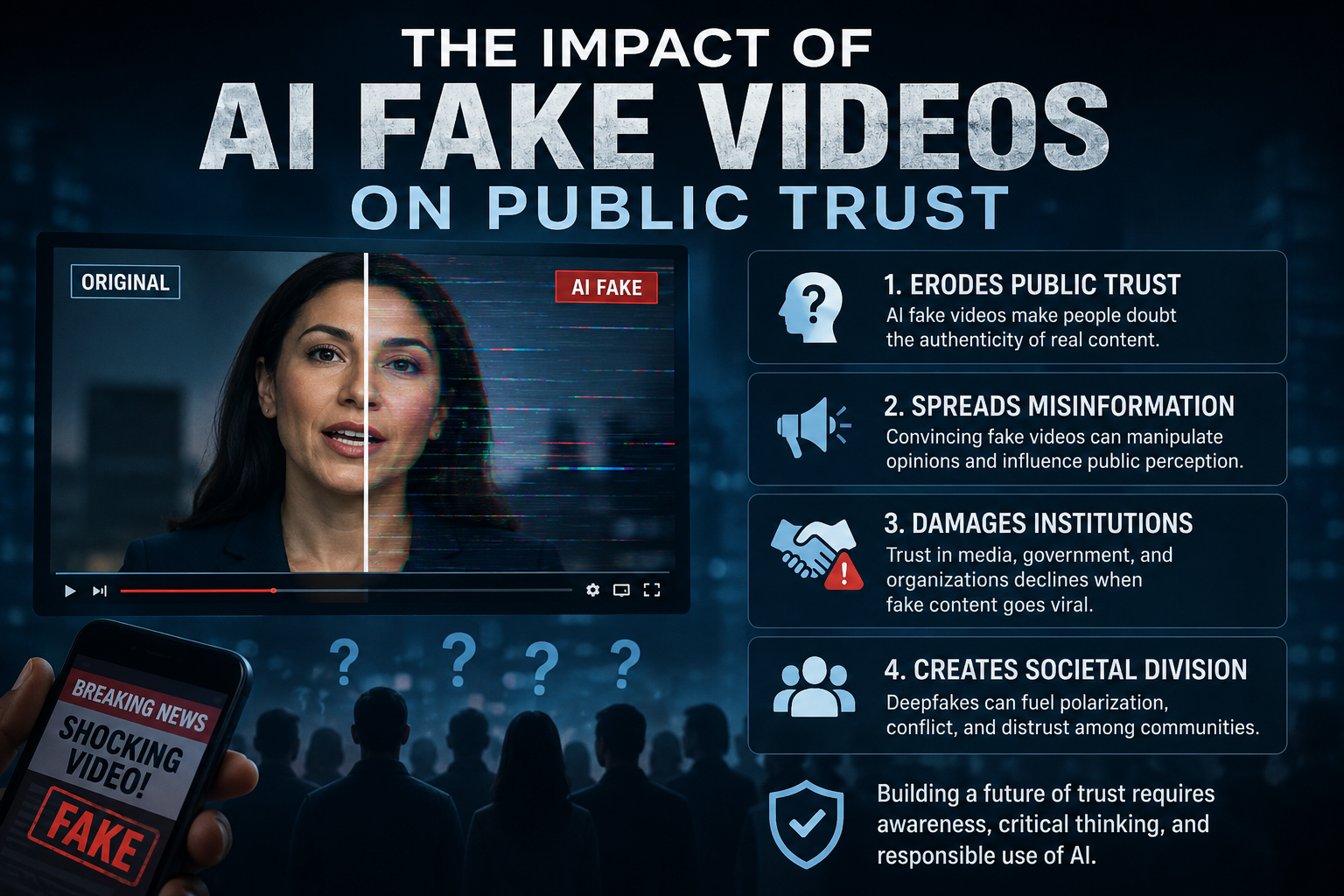
The Impact of AI Fake Videos on Public Trust is significant because AI-generated videos can make fabricated content appear authentic. As deepfake technology becomes more accessible, businesses, creators, media organizations, and consumers face growing challenges in verifying information, protecting reputations, and maintaining trust in digital content.
Introduction
Artificial intelligence is transforming content creation at an unprecedented pace. Yet alongside exciting innovations in video generation, a serious challenge has emerged: The Impact of AI Fake Videos on Public Trust.
What once required advanced visual effects teams can now be created using accessible AI tools. Highly realistic videos can place words into someone’s mouth, fabricate events, or simulate public figures with astonishing accuracy. As these technologies improve, the line between authentic and synthetic content becomes increasingly difficult to identify.
For creators, brands, marketers, and media organizations, this shift represents more than a technological development—it represents a trust challenge that could reshape the future of digital communication.
Understanding the Rise of AI Fake Videos
AI fake videos, commonly known as deepfakes, use machine learning models to generate or manipulate visual content.
Modern AI systems can:
- Replace faces in videos
- Clone voices
- Generate realistic facial expressions
- Create entirely synthetic people
- Produce AI-generated news-style content
The rapid advancement of AI video generation has significantly lowered production barriers.
While these capabilities unlock creative opportunities, they also introduce new risks when used deceptively.
Why Public Trust Is Being Tested
Trust is one of the most valuable assets in any digital ecosystem.
Consumers rely on video content to:
- Verify events
- Learn information
- Evaluate brands
- Follow public figures
- Make purchasing decisions
When audiences can no longer confidently determine whether a video is real, trust begins to erode.
The Growing Authenticity Problem
Historically, video served as strong visual evidence.
Today, AI-generated media challenges that assumption.
As realistic synthetic videos become more common, audiences may begin questioning even legitimate footage. This phenomenon is often called the “liar’s dividend,” where genuine content can be dismissed as fake.
The result is a broader crisis of confidence across digital platforms.
The Impact on Social Media Platforms
Social media has become one of the primary distribution channels for AI-generated content.
Deepfake videos can spread rapidly due to:
- Algorithmic amplification
- Viral sharing behavior
- Emotional reactions
- Lack of verification before reposting
A convincing fake video can reach millions before fact-checkers have an opportunity to respond.
Why Viral Deepfakes Are Effective
Many users engage with content based on headlines, emotional responses, and visual impressions rather than verification.
This creates an environment where synthetic media can influence perceptions long before corrections appear.
How AI Fake Videos Affect Brands and Businesses
Brand Reputation Attacks
A fabricated executive statement or manipulated corporate announcement could create confusion and damage credibility.
- Stock market volatility
- Customer distrust
- Negative media coverage
- Public relations crises
Consumer Confidence Challenges
Brands increasingly rely on video marketing and creator partnerships.
If audiences become skeptical of video content generally, marketing effectiveness may decline.
Businesses must therefore invest in authenticity and transparency initiatives.
The Role of AI in Both the Problem and the Solution
AI Detection Systems
Advanced AI detection tools can analyze:
- Facial inconsistencies
- Voice anomalies
- Metadata irregularities
- Visual artifacts
These systems help identify potentially manipulated content.
Content Authentication Workflows
Media organizations and technology companies are exploring:
- Digital watermarking
- Content credentials
- Blockchain verification
- Source authentication systems
These workflows aim to establish clearer chains of content ownership and authenticity.
What This Means for Content Creators
Building Audience Trust
Trust becomes a competitive advantage.
- Behind-the-scenes content
- Verified publishing channels
- Authentic engagement
- Clear AI disclosure practices
Adapting AI Video Production Responsibly
AI-powered production tools can dramatically improve efficiency.
- Automated editing
- AI voice generation
- Synthetic presenters
- Video enhancement workflows
The key difference lies in responsible disclosure and ethical implementation.
The Future of Digital Media Verification
The future of media production may depend on verification systems becoming as important as creation systems.
- AI authenticity labels
- Verified content credentials
- Real-time deepfake detection
- Platform-level verification frameworks
- Transparent AI content disclosures
Why Marketers Should Pay Attention
Marketing professionals increasingly use AI-generated content to scale production.
However, audience skepticism presents new challenges.
- Automation efficiency
- Content authenticity
- Consumer trust
- Regulatory compliance
Successful marketing strategies will likely combine AI-powered workflows with transparent communication practices.
People Also Ask
What are AI fake videos?
AI fake videos, often called deepfakes, are synthetic videos created using artificial intelligence to realistically alter faces, voices, or actions.
Why are deepfakes dangerous?
Deepfakes can spread misinformation, damage reputations, influence public opinion, and reduce trust in digital media.
How can businesses protect themselves from AI fake videos?
Organizations can use AI detection tools, content authentication systems, and media verification workflows.
How do AI fake videos affect social media?
They increase the difficulty of distinguishing real content from fabricated media, creating challenges for platforms and users alike.
Will AI fake videos become more common?
Yes. As AI video generation tools improve and become more accessible, synthetic content is expected to grow across media, marketing, and entertainment.
Conclusion
The Impact of AI Fake Videos on Public Trust extends far beyond technology itself. It affects media organizations, brands, creators, marketers, and everyday consumers navigating an increasingly complex digital landscape.
While AI-generated video tools offer remarkable creative opportunities, they also challenge long-held assumptions about visual authenticity. The future of digital media will likely depend on balancing innovation with transparency, verification, and ethical content practices.
As AI continues transforming creative production workflows, the organizations and creators that prioritize trust will be best positioned to thrive in the evolving media ecosystem.


