
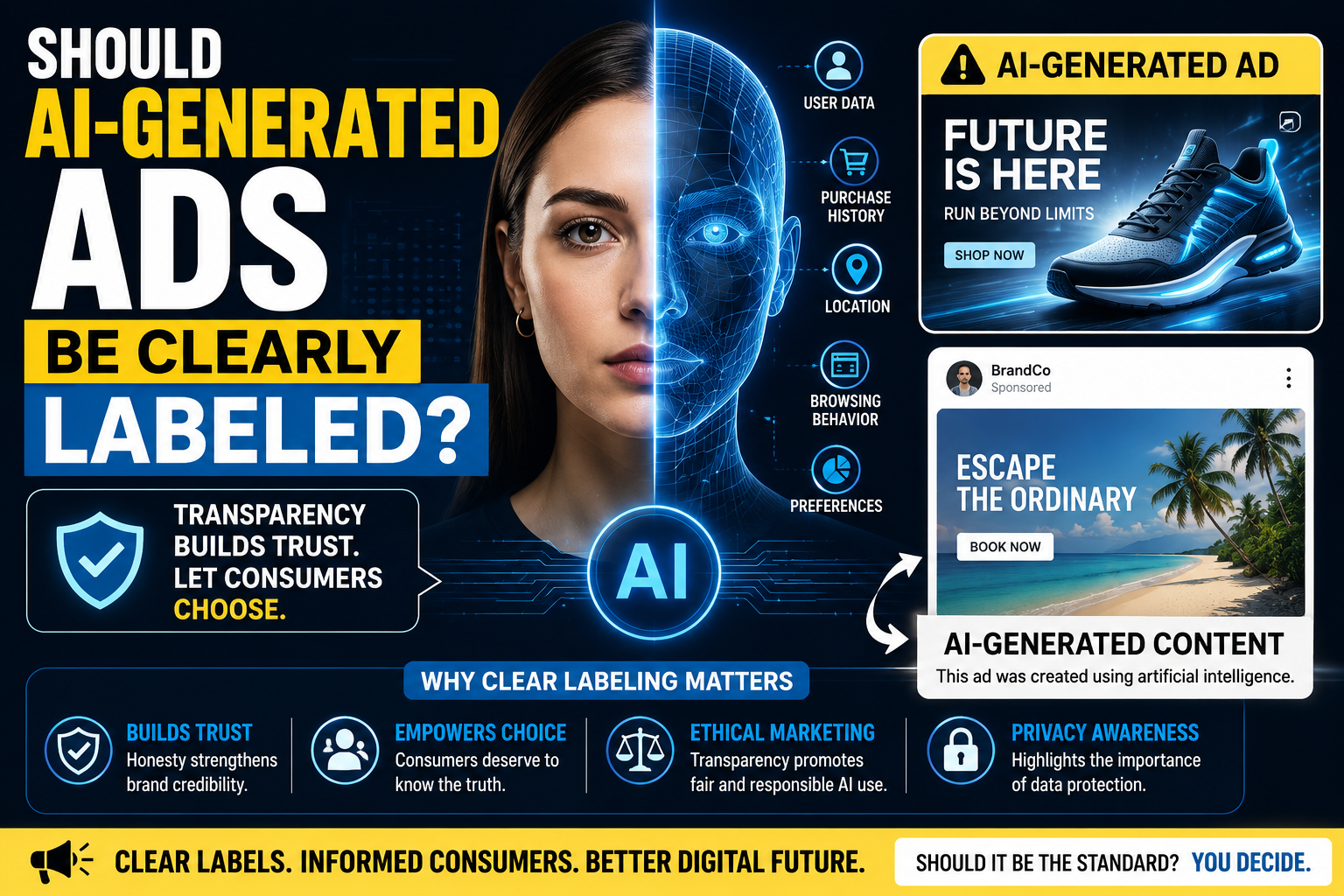
Should AI-Generated Ads Be Clearly Labeled?
Many experts believe AI-generated ads should be clearly labeled to improve transparency, strengthen consumer trust, and help audiences understand when artificial intelligence has influenced marketing content. As AI adoption accelerates, disclosure may become a standard practice across the advertising industry.
The Rapid Rise of AI-Generated Advertising
Artificial intelligence is transforming digital advertising at an unprecedented pace. Modern AI tools can create ad copy, marketing visuals, promotional videos, voiceovers, and even virtual influencers within minutes.
Businesses are embracing AI because it offers:
- Faster content production
- Lower creative costs
- Scalable marketing automation
- Personalized customer experiences
- Improved campaign optimization
While these advantages are significant, they also raise questions about authenticity and transparency.
Why Transparency Matters in AI Marketing
Advertising relies heavily on consumer trust. When audiences discover that content was generated by AI without disclosure, some may feel misled.
As AI-generated content becomes more realistic, transparency is becoming an increasingly important issue for marketers and brands.
- Hidden AI-generated endorsements
- Synthetic brand ambassadors
- AI-generated testimonials
- Artificial product imagery
- Deepfake-style promotional content
Clear disclosure helps consumers make informed decisions while strengthening confidence in a brand.
How Disclosure Can Improve Consumer Trust
Some marketers worry that labeling AI-generated ads could reduce engagement. However, transparency often has the opposite effect.
When brands openly disclose AI involvement, they demonstrate:
- Honesty
- Accountability
- Ethical responsibility
- Commitment to transparency
- Respect for consumers
The Impact on Brand Reputation
As AI becomes deeply integrated into creative production workflows, disclosure policies can help protect brand reputation.
Forward-thinking organizations are already creating AI governance frameworks that include:
- AI content guidelines
- Disclosure standards
- Human review processes
- Ethical marketing policies
- Consumer communication strategies
These frameworks help ensure that automation enhances brand value rather than creating uncertainty.
AI Influencers and Virtual Brand Ambassadors
The creator economy is experiencing a major shift through the rise of AI influencers and virtual personalities.
These digital creators can:
- Produce content 24/7
- Promote products
- Represent brands globally
- Interact with audiences
- Scale marketing campaigns efficiently
However, consumers increasingly expect to know whether a creator is human or AI-generated. This expectation further strengthens the argument for clear disclosure practices.
Regulatory Pressure Is Increasing
Governments and regulatory agencies worldwide are evaluating how AI-generated content should be disclosed.
Potential future regulations may include:
- AI-generated content labels
- Synthetic media disclosures
- Deepfake identification requirements
- Advertising transparency standards
- Consumer protection measures
Businesses that adopt transparent AI practices today may be better prepared for future compliance requirements.
The Business Benefits of AI Transparency
Beyond ethics and regulations, transparency also offers strategic business advantages.
- Reduced reputation risk
- Stronger customer loyalty
- Improved brand credibility
- Competitive differentiation
- Sustainable AI adoption
Trust remains one of the most valuable assets in modern digital marketing.
How AI Is Reshaping Creative Workflows
Modern AI-powered marketing systems now support nearly every stage of content production.
Organizations use AI for:
- Content creation
- Image generation
- Video production
- Audience analysis
- Campaign optimization
- Marketing automation
Rather than replacing human creativity, many businesses are combining AI efficiency with human strategy and storytelling.
The Future of AI Advertising
The debate surrounding whether AI-generated ads should be clearly labeled will continue as artificial intelligence becomes more sophisticated.
Key trends shaping the future include:
- Growing consumer awareness
- Demand for transparency
- Expansion of AI-generated media
- Stronger ethical standards
- Emerging regulatory frameworks
Brands that prioritize transparency today may gain a long-term trust advantage as the advertising industry evolves.
Conclusion
Should AI-Generated Ads Be Clearly Labeled? The evidence increasingly suggests that transparency benefits both consumers and brands.
AI is revolutionizing advertising through automation, personalization, and scalable content creation. However, maintaining trust will be essential as AI-generated media becomes more common.
Organizations that embrace responsible AI disclosure practices can strengthen consumer confidence, improve brand reputation, and position themselves for long-term success in the future of digital marketing.


